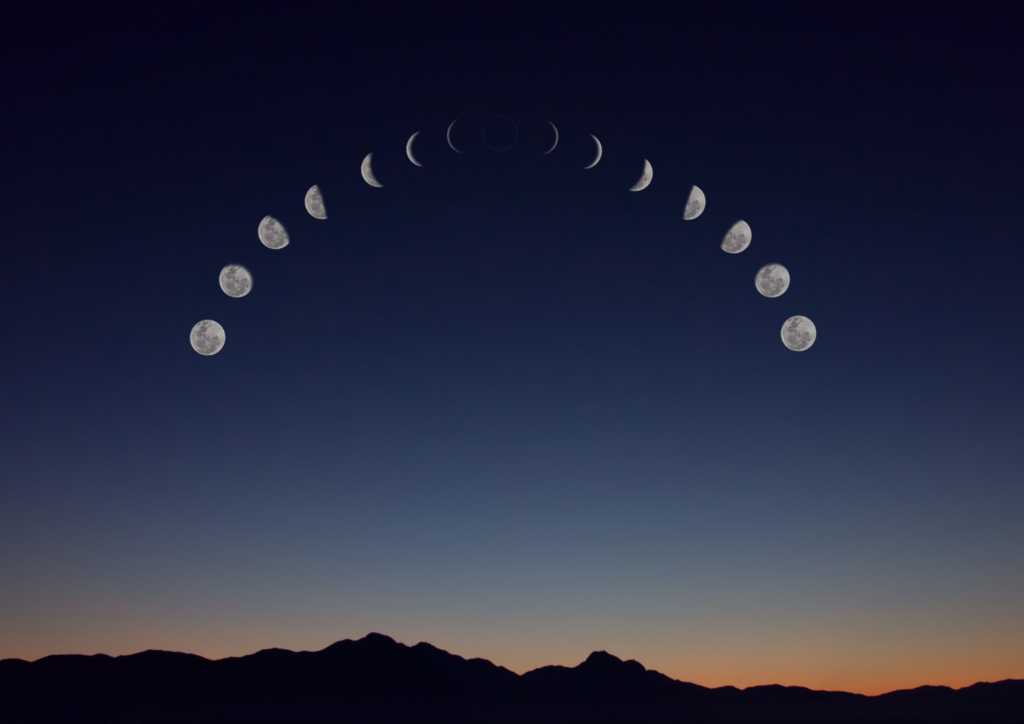
We push our way through the day, the way we think it should go, and the body is expected to fall in line. We want to be able to eat at any time, to always be on the move, constantly capable, reachable at any moment. It may work for a few years, until it no longer does. And then we look for the fault in the body or in our circumstances. Rarely in ourselves. And almost never in the plain fact that, for a while, we have been living against our own nature.
There is another way to meet the day, and it begins with an observation that seems unremarkable at first: that we move within an order we did not make. It rarely finds expression, because we mostly confine ourselves to our intellect, and to what we believe we understand about life.
Two Kinds of Structure
Most of the structures we live in are made by people. The calendar, working hours, deadlines, the idea of when something ought to happen. That is structure too, but an imposed one, made by the mind. And over time we mistake it for order itself. We take our plan for reality and expect the body to submit to it.
But beneath it lies another order. One that was already there before we made our plans. It is not ours, and it does not want to be enforced, but to flow. What hinders it is rarely life itself. It is the mind that sets itself above it, and the conditioning we have practiced so long that we take it for ourselves.
The distinction matters, because it dissolves the most common misunderstanding. Daily routines in the Ayurvedic sense are not one more structure we impose on ourselves. They are the opposite. They are the letting go of the imposed order in favor of the given one. Not more discipline, but less forcing. A listening, rather than an insisting.
The World Is a Vessel
Structure is orientation, warmth, a hold, without being dull or rigid. It is the vessel. The world is a vessel and has its structure. The body is a vessel and has its structure. And within this vessel a system can find its bearings, something can happen without losing itself.
This is no restriction of what is alive, but its condition. A river needs banks, or it seeps away. A note needs the space of an instrument, or it fades. What is alive needs a form in which it can show itself. Without form it scatters, and in too rigid a form it suffocates. Structure in the good sense is both at once: it holds, and it lets flow.
When the Wind Takes Over
Why this matters so much for a human being can be understood through the wind, through Vayu. In the Ayurvedic view it is movement that first falls out of balance, and where Vayu takes over, that is often the beginning of illness. Vayu is quick and very subtle. It pervades everything and, without structure, expands into the boundless.
That is a beautiful quality, and it has its place. But for a person who lives in a body and is bound to it, boundless is not always a home. Behind movement lies the space in which it happens, and the disturbance is rarely simply too much movement. It is a disturbed relationship between space and movement. Too little space, and within it either a restless excess or a rigidity in which nothing flows anymore.
A daily order gives the wind a form. It is the vessel in which movement neither loses itself in the boundless nor comes to a standstill. It creates space, and it gives what happens within it a direction. That is the real service of routine, long before any single action: it holds the space in which a person can stay with themselves.
Recurring, and Yet Never the Same
Everything moves in a rhythm. A sequence that repeats, in the large and in the small. Day and night, the seasons, the rising and setting of the moon, the breath itself. And a daily routine is nothing other than the joining of a single life to this greater rhythm.
And here lies the rescue from the thought that routine is rigidity. Rhythm is not the repetition of the same. The sunrise returns every morning and is never the same. The seasons repeat and are new each year. It is something ever-recurring, and yet never the same. That is exactly what distinguishes a living structure from a rigid one. It is a form in which life may happen anew, again and again.
When Which Quality Carries
Ayurveda shows which qualities prevail at which point in the day’s course, and how one can use them and go with them, rather than against them. This is not an invention and not a rule, but the observation of an order that is there anyway.
The early morning carries a Vata quality, light and clear, and lends itself to stillness, to meditation, to whatever needs spaciousness. At midday, when the sun is highest, the fire is at its strongest, and that is the time for the main meal, when Agni can transform most readily. The morning carries the same power for mental work, for what asks for transformation. In the afternoon the Vata quality returns and wants to be soothed. And the evening asks that we not eat too heavily, so that the heaviness of Kapha does not take over, for the real after-digestion begins only in the night.
These are things that are given, and that our system orients itself by anyway. We can go with them, or we can go against them. Daily routines take hold right here. They are the support to nourish the prevailing forces and to be in balance with them, rather than fighting against them and trying to force a different result through more doing.
The Greater Circles
The day is only the nearest of these circles, the one we can shape most directly. But it is embedded in larger ones, and the same logic carries there too: to go with the rhythm, rather than against it.
The seasons have their own qualities, and Ayurveda knows an order for them too, Ritucharya, which lets diet and way of life move gently with the year. Autumn is dry, light, mobile, a Vata time that needs warmth and grounding. Late winter and spring are heavy and damp, a Kapha time that calls for lightness and stimulation. High summer carries the fire and wants to be cooled.
The body carries its own circles too. A woman’s monthly cycle is one such, an ebb and flow with its own rhythm, one that most readily settles when the life around it is steady enough for it to unfold. And the moon, drawing its phases over everything, is the oldest image for this recurring, never identical movement.
One does not need to master these greater circles. It is enough to know that they are there, and now and then to pause and ask: which season am I in, which phase, and what does my system need within it? The day is the beginning. From it, the view opens to the greater of its own accord.
When the Ground Is Missing
There is no need to leave this abstract. A life with much movement and little arriving, constant changes of place, travel, a daily life without a fixed frame, is at heart a life in which Vayu takes over. And because Vata is the main mover, it rarely stops at movement alone.
First it shows at the fire. Agni becomes irregular, now hunger, now none, now calm digestion, now unease. A fire in the wind never burns evenly. This is why regularity is not severity, but the precise answer to this quality: it gives the fire the shelter it needs.
And what the fire does not reliably transform does not reliably reach the tissues. First the nourishing layer, then, over time, the finer and more rhythmic ones: sleep, the nervous system, the regularity of what in the body follows a cycle of its own. Not because the body fails, but because it lacks the ground on which rhythm can arise at all.
This is why Ayurveda advises here so plainly and so persistently: warmth, regularity, grounding. It is not a wellness tip. It is the opposite of the cause. And it also explains why some things only settle once life itself regains some ground. One can support much with herbs and rituals, but as long as Vayu is constantly fed anew from outside, part of the unrest remains in the system. That is not a failure. It is an honest reckoning, and a reason to be gentle with oneself.
A Listening, Not an Insisting
Seen this way, what a routine even is begins to change. It is not the next regime we give ourselves in order to finally function. It is the laying down of that regime. A fitting of ourselves into an order that does not come from us and that we cannot improve by doing more.
It is a listening. A noticing of the current that wants to flow anyway, and a ceasing to drown it out. Not the forcing of a different result through more effort, but the nourishing of what carries in each hour. And over time, ever so quietly, the feeling of being held again by something larger than one’s own plan.